Friday, 22 June 2012

Time to Say Goodbye

Today our students of the fourth year have definitely finished their ESO days. It's been a real pleasure to have shared all these years with you.


But now, it's time say goodbye, and wish you had good luck.


Wednesday, 13 June 2012

Can I have...?

The Students of 3rd year of the school have prepared some short dialogues about food. Take a look at them, it's worth it!


This video is password protected, so ask your teacher!!!


Pretty Ritty


The students of 5th year of the school have performed some very special versions of the famous Pretty Ritty. All of you are invited to see the show...

These videos are password protected, so ask your teacher!!!


5è-A
5è-B


Monday, 11 June 2012

Daily Routines Around the World


The students of the 6th year of the school have studied the daily routines of some countries around the world. Let's have an eye on it. 

These videos are password protected, so ask your teacher!!!


6è-A


6è-B

Friday, 8 June 2012

Republic of South Africa

 
Short film about the Republic of South Africa made by Pakiza, Khadija and Salma.


Malta


Short film about Malta made by Umair, Fahad and Aarón.


The United States of America


This is a short film about the United States of America made by Hamza and Robert.

Jamaica


This is a short film about Jamaica made by Aqsa  and Aeman.


Australia


Short film about Australia made by Ehtasham and Mustaneer.

Ireland


This is a short film about Ireland made by Daoud, Kaoutar and Cautar.


The United Kingdom


This is a short film about the United Kingdom made by Yafeng, Saqib and Zahoor.


Wednesday, 6 June 2012

Baseball

Here you have how some of the students of the third year have understand the baseball:


Tuesday, 5 June 2012

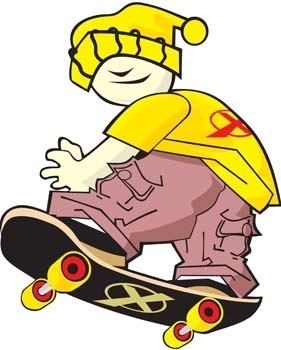
Skateboard

Here we have how some of the students of the 3rd year understand skateboard:


Motocross

Here you have how some of the students of the 3rd year understand motocross:


Football

Here you have how some of the students of the 3rd year understand the football:


Thursday, 31 May 2012

Power Point Tutorial

To create your final project for your English class, you should know how to do a Power Point presentation.


GFC LearnFree Organization provides you with a clear, wide tutorial to learn how to do a good slide show.


But if you haven't got time enough, have an eye to this video tutorial:


Past Perfect Simple

The past perfect simple expresses an action taking place before a certain time in the past.

Form of Past Perfect Simple


Positive
Negative
Question
no differences
I had spoken.
I had not spoken.
Had I spoken?
For irregular verbs, use the past participle form . For regular verbs, just add ed.

Exceptions in Spelling when Adding ed

Exceptions in Spelling when Adding ed
Example
after final e, only add d
love – loved
final consonant after a short, stressed vowel
or l as final consonant after a vowel is doubled
admit – admitted
travel – travelled
final y after a consonant becomes i
hurry – hurried

Use of Past Perfect

  • action taking place before a certain time in the past (putting emphasis only on the fact, not the duration)

Example: Before I came here, I had spoken to Jack.

  • Conditional Sentences Type III (condition that was not given in the past)

Example: If I had seen him, I would have talked to him.

Signal Words

already, just, never, not yet, once, until that day (with reference to the past, not the present)

Monday, 28 May 2012

The Imperative Form

You can use the imperative form to give an order, a warning, or some advice.

To form the imperative, use the infinitive form of the verb without "to". To make a negative imperative, put "do not" or "don't" in front of the verb, as in, "Don't speak!"
Affirmative
Negative
Come here
Don't cross the street
Go there 
Don't say that
Open the door 
Don't be late 
Turn on the TV 
Don't fight 
Sit down 
Don’t go

The imperative is formed the same for all subjects (you, he, we, they), but you can include yourself in the imperative by adding "Let's," as in, "Let's go for a swim".
Affirmative
Negative
Let's work!
Let’s not work!
Let's make a party!
Let's not make a party!
Let's go!
Let's not go!
Let's play!
Let's not play!
Let's go home!
Let's not go home!


Activities:

Thursday, 24 May 2012

Shakira

Hugely successfully Colombian pop singer and dancer, Shakira (Barranquilla, Colombia, February 2, 1977) has won two Grammy Awards, seven Latin Grammy Awards, twelve Billboard Latin Music Awards, and has been Golden Globe-nominated. She is the highest-selling Colombian artist of all time, and one of the most successful female Latin singer.

Apart from her singing career, Shakira has created Pies Descalzos Foundation, an organization that fights to find opportunities for vulnerable and displaced children in Colombia.

She also studied in a Lestonnac school in Barranquilla, so she can be considered as your schoolmate!

More information:


Saturday, 19 May 2012

Must & Mustn't

Must is a modal auxiliary verb. In one of its meanings, it is used to give strong advice or orders (to oneself or to other people).

Affirmative
I
You
He
She
It
We
You
They
must
go
come
work
live
speak

Mustn't means that it is neccesary that you do not do something.In other words, it is used to tell people not to do things.

Negative
I
You
He
She
It
We
You
They
must not
mustn't
go
come
work
live
speak

We use the questions with must to ask about the intentions of wishes of the person one is speaking to.

Interrogative
Must
I
you
he
she
it
we
you
they
go?
come?
work?
live?
speak?

Affirmative answers
Negative answers

Yes,
I
you
he
she
it
we
you
they
must.
No,
I
you
he
she
it
we
you
they
mustn't.